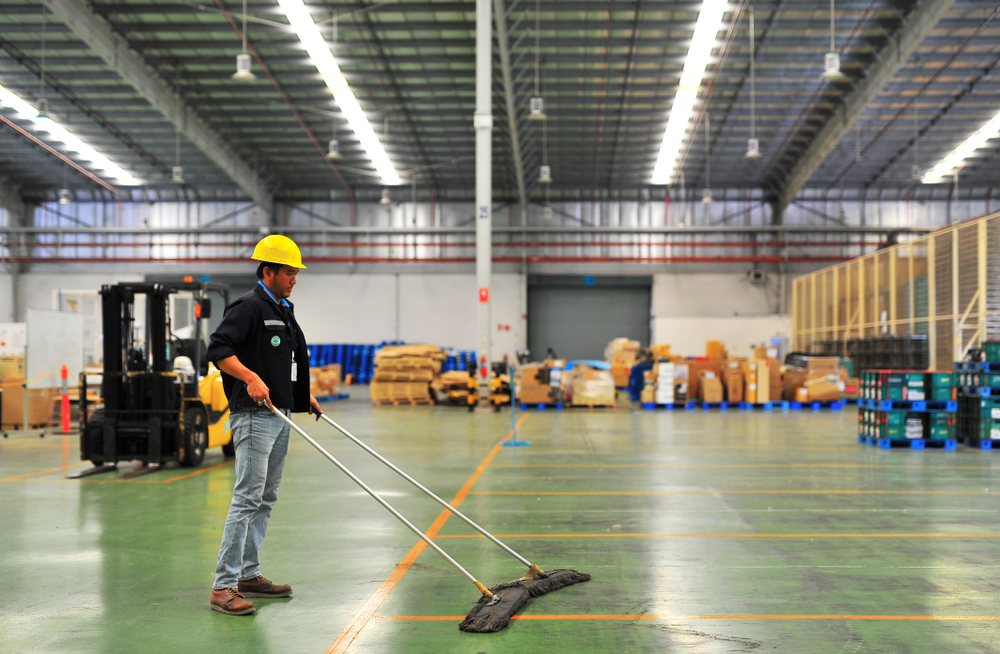
In a warehouse, the floor never really gets a break. Pallets roll in off the trucks while forklifts make the same runs up and down the lanes, dragging debris along with them all shift long. There’s no quiet hour when everything stops long enough for a crew to work in peace. That’s a big reason warehouses ask so much more of janitorial cleaning services in White Marsh than a typical office does.
Keep reading to see what makes these spaces so tricky and how facility upkeep built around actual traffic can fit into a working warehouse without slowing anyone down.
What are the biggest cleaning challenges in a warehouse?

The biggest hurdle is that a warehouse doesn’t act like one big uniform space. Things change as crews move from open travel lanes into tight storage areas, and the loading dock brings its own set of problems. One checklist rarely covers all of it.
Large floor areas require broad coverage
A huge footprint changes what crews can get to easily and where they need to slow down. Nobody can treat every square foot the same way and still finish on time.
Main travel lanes get constant use
The main travel lanes see forklifts and foot traffic all day long. Any work there has to fit around that movement instead of bringing it to a halt.
Tight areas need deliberate coverage
Dirt also piles up around shelving and equipment, where it’s harder to reach. Routine upkeep across customer-facing retail floors comes down to how shoppers move through the space, but warehouse traffic throws in heavier equipment and constant trips between the dock and storage. That’s how grime picked up near the dock ends up much deeper in the building.
Traffic keeps redistributing debris
Once debris gets inside, it rarely stays put. Equipment wheels drag it across the floor, and scraps of cardboard get ground into smaller and smaller bits under all that traffic.
In busy storage areas, keeping aisles clear of obstructions matters for safety, too. Loose material in a travel path needs to be dealt with before it trips someone up or gets in a forklift’s way.
Racking limits access
The way storage is laid out decides where crews can move freely and where even routine work takes longer. Tall racking and packed aisles don’t leave much room to work with.
Storage layouts change how crews move
Open floor makes for straightforward work, while the narrow gaps around stored materials take a lot more care. Racking can also keep larger equipment from reaching parts of the floor.
Access changes throughout the shift
Inventory moves around all day, and access changes with it. An aisle that’s wide open on first shift might be packed with pallets by second, so the schedule has to follow how the work actually flows.
Spills require a planned response
A spill near the dock calls for a different response than dry dust along a storage aisle. What spilled and what it landed on both affect how it should be handled, and nearby equipment can make it harder to reach. The crew has to fix the problem without creating a new obstacle in the process.
Surface type matters in other parts of the building too, like with commercial carpet care between deep treatments, where the method has to match both the flooring and whatever’s been ground into it.
Why should warehouse upkeep be planned around operations?
A plan that works follows how the building is actually used. Areas near the dock may need attention more often, while office areas usually keep a different rhythm. Timing matters too, since working an aisle in the middle of a busy receiving window can throw off everyone’s day.
Those office spaces often need their own schedule, a lot like keeping meeting rooms ready between uses, while the warehouse floor has to be worked around whatever’s moving through it.
Why professional crews matter in active facilities
The work has to happen in a building that keeps running the whole time. That takes planning, plus a crew that’s comfortable working around moving equipment.
Upkeep has to follow operations

An experienced commercial crew picks up on where traffic is spreading dirt and how access shifts over the course of the day. The plan can then follow what’s really happening instead of treating every section the same.
Warehouse staff have operational priorities
Your team already has plenty on its plate with inventory and day-to-day operations. Piling ongoing upkeep on top of that pulls them away from the work that keeps orders moving. A professional walkthrough lets the maintenance schedule be built around the facility, so your staff can stay focused on their jobs.
Where can businesses book dependable janitorial cleaning services in White Marsh, MD?
Your warehouse in White Marsh doesn’t pause for upkeep, so upkeep has to work around it. Working with Green Apple Cleaning means a schedule built around your business hours, so our crews fit into the flow of the day instead of interrupting it. Dock zones might need attention more often than the quieter office side, and we’ll map that out with you.
We’ve spent more than 20 years looking after businesses across Maryland, and every job comes with a 100% satisfaction guarantee. Running a facility near Loreley Community Center? Reach out for a free quote, and let’s plan around how your building works.